How to Start an Online Marketplace in 2026 (Step-by-Step)
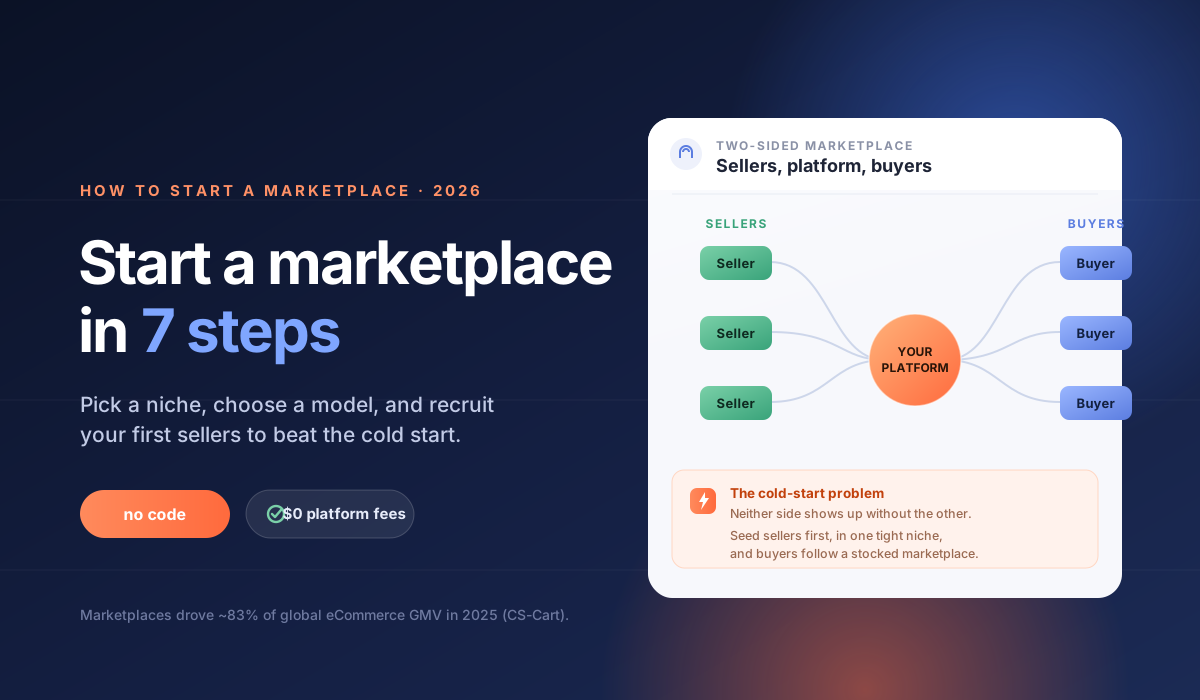
If you want to know how to start an online marketplace, the honest answer is that it is less about the software than about a hard early problem: you need sellers to attract buyers, and buyers to attract sellers, at the same time. An online marketplace connects those two groups and takes a cut or a fee for making the match. This guide walks through the seven steps that actually get one off the ground, including the part most guides skip: how to recruit and keep your first sellers.
What is an online marketplace, and how does it make money?
An online marketplace is a platform where many independent sellers list products or services and buyers transact with them, while the platform handles discovery, payments, and trust. It makes money in one of four ways: a commission on each transaction, a flat subscription from sellers, listing or lead fees, or a free tier with paid upgrades. Most marketplaces pick one primary model and layer a second on later. For a full breakdown, see marketplace business models explained.
The model is winning. Marketplaces accounted for roughly 83% of global eCommerce gross merchandise value in 2025, a share expected to reach about 87% in 2026, and global eCommerce itself is on track for around $7.41 trillion in 2026 (CS-Cart, 2026; see Sources). That is the opportunity. The challenge is getting your own marketplace past its first cold, empty months.
How do you start an online marketplace?
You start an online marketplace by validating a niche, choosing a revenue model, deciding how to build it, and then solving the cold-start problem by recruiting one side of the market by hand before you scale. The build is the easy part now. The work that decides success is the manual, unglamorous effort of getting your first sellers active and keeping them there. The seven steps below follow that order.
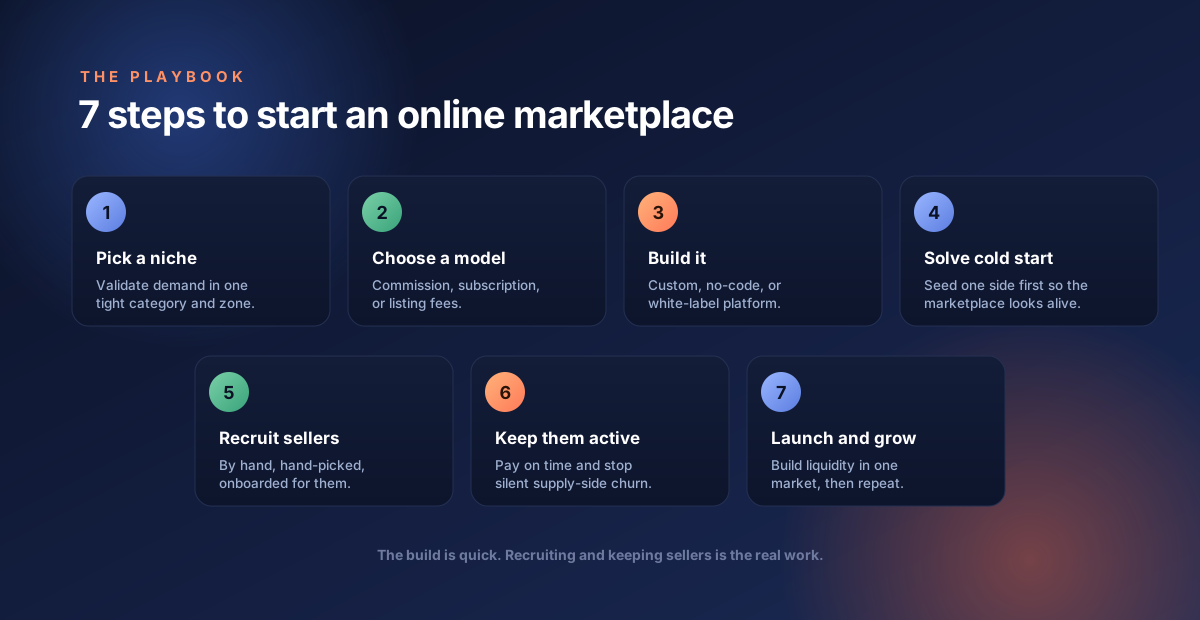
Step 1: Pick a niche and validate demand
Start narrow. A marketplace with 30 active sellers in one city and one category beats one with 3 sellers spread across a country. Pick a category where buyers already struggle to find good sellers, talk to ten people on each side, and confirm they have the problem before you build anything. A tight niche also solves density: early buyers need to see enough choice in their area to come back.
Step 2: Choose your marketplace model
Decide how you take your cut before you build, because it shapes everything else. A commission model aligns you with seller success but needs volume to pay off. A subscription model gives predictable revenue and suits high-frequency sellers. Listing or lead fees fit low-frequency, high-value categories like real estate or services. Whichever you choose, keep it simple at launch. See marketplace business models explained to pick one.
Before you build, decide how hands-on your platform will be: managed marketplace vs listing marketplace breaks down the choice.
Step 3: Decide how to build it
You have three ways to build a marketplace, and they differ mostly in cost and speed. Custom development runs into five or six figures and takes months. A no-code or white-label platform lets you configure a ready marketplace and launch in weeks instead. Building it yourself from scratch only makes sense when your model is genuinely different from anything that exists. For the technical build itself, see how to build a multi-vendor marketplace; for real numbers, see what it costs to build a marketplace.
| Build path | Typical cost | Time to launch | Best for |
|---|---|---|---|
| Custom development | Five or six figures | 3 to 6+ months | A genuinely novel model, with capital to fund it |
| No-code / white-label | Flat monthly subscription | About 2 weeks | Most standard marketplaces |
| Build it yourself | Your time plus tools | Months | Technical founders testing an idea |
Step 4: Solve the cold-start problem
The cold-start problem is the chicken-and-egg trap: buyers will not come without sellers, and sellers will not stay without buyers. You break it by seeding one side first, usually the sellers, because supply is easier to recruit directly and demand follows a stocked marketplace. Do not try to launch both sides at once in a wide area. Concentrate supply in one niche and one zone so the first buyers see a marketplace that already works.
Step 5: Recruit your first sellers by hand
Do not automate seller recruitment at the start. Every marketplace that worked began with direct, manual outreach: phone calls, in-person visits, and personal pitches to hand-picked sellers. Expect the first 50 to take real effort, because sellers are wary of an unproven platform. Onboard them yourself, walk them through setup, and guarantee them order density in a tight area so they actually earn from day one.
Three things make manual recruitment work:
- Hand-pick for quality. Choose your first sellers rather than opening the doors, so early buyers get a good experience.
- Do the onboarding for them. Take on the setup friction yourself instead of expecting busy sellers to self-serve.
- Guarantee density. Keep supply tight in one zone so early sellers get consistent orders, not silence.
Example: how Airbnb did it. In 2009 Airbnb was live in New York but bookings were flat. The founders traced the problem to poor listing photos, so they rented a camera and went door to door photographing hosts' apartments themselves, one at a time, for about a week. Listings with professional photos booked at roughly double the rate, and New York revenue doubled with them. It was completely unscalable, and it was the turning point. Your version will look nothing like photography, but the principle is the same: do the manual, unglamorous work that makes your first sellers succeed. This is the story behind Paul Graham's advice to early founders to "do things that don't scale" (see Sources).
Step 6: Keep your sellers active
Sellers rarely quit loudly. When payouts are slow or the tools are clunky, they simply stop opening the app and let their listings go stale. This silent supply-side churn drains liquidity and leaves buyers staring at empty storefronts. Preventing it comes down to paying sellers reliably, keeping their tools simple, and spotting fade early. A good operating platform helps here: an admin console that shows you order activity per seller lets you notice a fading vendor before they are gone, and dependable split payouts keep your best sellers motivated.
If you are setting up payouts for the first time, see how marketplace payments work: split payments, payout schedules, and escrow explained.
Step 7: Launch, build liquidity, and grow
Launch to the buyers nearest your seeded supply, not to everyone. Your first goal is liquidity: enough sellers and buyers in one place that transactions happen reliably. Once a niche and zone are liquid, repeat the playbook in the next one. Growth in a marketplace is a series of small liquid markets stitched together, one zone at a time.
Once your marketplace is running, our guide on how to scale it once it is live covers the liquidity thresholds to aim for, which side to grow first, and when to expand.
What are the most common mistakes when starting a marketplace?
The most common mistakes are launching both sides at once across a wide area, automating seller recruitment before you have buyers, and treating retention as an afterthought. Founders celebrate signing sellers, then lose them quietly to slow payouts and clunky tools. Concentrate on one niche and one zone, recruit supply by hand, and treat keeping sellers as seriously as getting them.
The three that sink early marketplaces:
- Going wide too early. Spreading thin supply across a whole country instead of dominating one niche and zone, so no buyer ever sees a marketplace that works.
- Recruiting sellers with ads. Paying to acquire sellers before there are buyers to give them orders, so they sign up and immediately fade.
- Ignoring silent churn. Watching sign-up numbers while active sellers quietly stop showing up, until liquidity has already drained.
How much does it cost and how long does it take?
Starting an online marketplace costs anywhere from a flat monthly subscription on a no-code platform to five or six figures for a custom build, and it takes from a couple of weeks to several months depending on that choice. The recruitment work, not the software, is where most of your early time goes. See the full cost breakdown for figures by build path and vertical.
Where Nipige fits
Nipige is a no-code, white-label marketplace builder, so it removes the build step and lets you spend your time on the part that matters: recruiting and keeping sellers. You configure a ready template for food delivery, real estate, or services, onboard your sellers with verification, and go live with branded customer, vendor, and admin apps in about 14 days. The admin console shows order activity so you can spot a fading seller early, split payouts pay your vendors reliably, and there are $0 platform transaction fees, so you keep your margin while you build liquidity. See pricing for current plans.
FAQ
How do I start an online marketplace? Start an online marketplace by validating a narrow niche, choosing a revenue model (commission, subscription, or listing fees), deciding how to build it (custom, no-code, or white-label), and then recruiting one side of the market by hand. The build is quick now; the work that matters is getting your first sellers active and keeping them.
What is the hardest part of starting a marketplace? The hardest part is the cold-start problem: buyers will not come without sellers, and sellers will not stay without buyers. You solve it by seeding supply first, recruiting your first sellers manually in a tight niche and zone, and guaranteeing them order density so the marketplace works from day one.
How much does it cost to start an online marketplace? It ranges from a flat monthly subscription on a no-code or white-label platform to five or six figures for a custom build. The build method decides most of the cost, and a no-code path can launch in weeks instead of months. See the cost-to-build guide for figures by path and vertical.
How do you get your first sellers on a marketplace? You recruit your first sellers by hand, not through ads. Hand-pick quality sellers, do their onboarding for them, and guarantee order density in one tight zone so they earn from the start. Plan for the first 50 to take direct outreach and personal effort.
How do online marketplaces work? An online marketplace works by connecting many independent sellers with buyers in one place, while the platform handles discovery, payments, and trust. Sellers list products or services, buyers browse and transact, and the marketplace takes a commission, subscription, or listing fee for making the match and running the infrastructure.
Can you start an online marketplace with no money? Not truly for free, but you can start cheaply. A no-code or white-label platform replaces a five or six figure build with a flat monthly subscription, and your biggest early investment is time, not cash: recruiting your first sellers by hand. Avoid custom development until you have proven real demand.
Do I need to code to start an online marketplace? No. No-code and white-label marketplace builders let you configure a ready platform, including customer, vendor, and admin apps, without writing code, so you can launch in about two weeks and focus your time on recruiting sellers rather than building software.
The Nipige team builds and operates production marketplace infrastructure - vendor onboarding, real-time dispatch, payments, and native apps - drawing on 13+ years of enterprise billing and monetization engineering at Trigital Technologies.