On-Demand Food Delivery App Development: What It Takes (and the Faster Way to Launch)
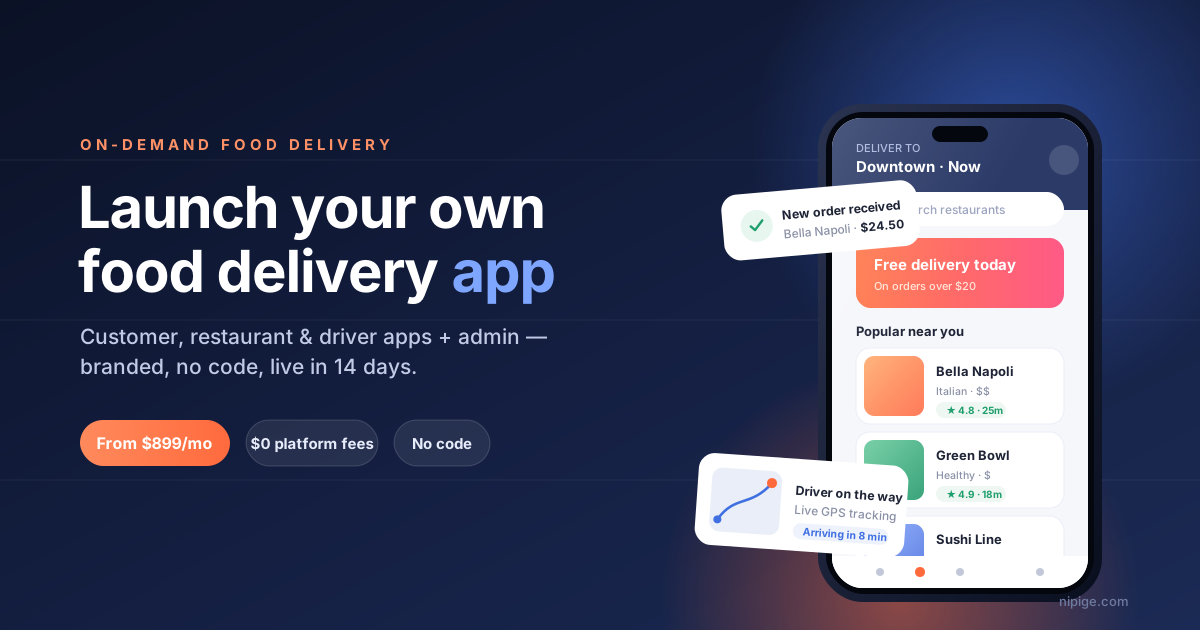
On-demand food delivery app development means building connected apps: a customer app to order, a restaurant app to manage menus and orders, an admin console, and usually a driver app for delivery. Building custom is costly; Nipige launches a branded food delivery marketplace without code in about 14 days.
If you're pricing out on-demand food delivery app development, you've probably already found the two answers the internet keeps giving: hire a development company for a custom build, or wrestle a generic app builder into shape yourself. There's a third answer most of those pages skip, and for a lot of operators it's the right one. This covers all three — honestly — so you can pick.
First, the thing nobody tells you up front: an on-demand food delivery app isn't one app. It's four, and three of them are where projects blow their budget.
What "on-demand food delivery app development" actually includes
When people say "food delivery app," they picture the customer's screen. But a working delivery marketplace needs four connected pieces:
- A customer app — search, menus, cart, checkout, live order tracking.
- A restaurant app or panel — accept orders, manage the menu, mark items unavailable.
- A driver app — real-time GPS dispatch, route optimization, delivery OTP.
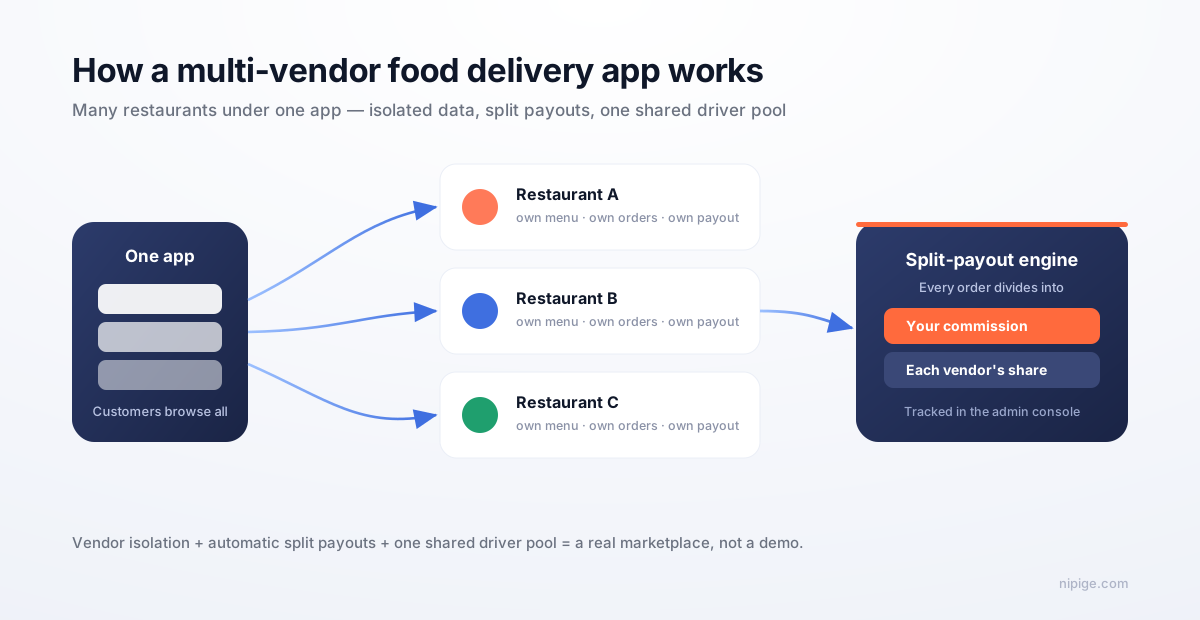
- An admin console — assign orders, split payouts between you and each restaurant, and see what's happening live.
The customer app is the easy 25%. The dispatch logic (which driver gets which order, tracked live) and the payout logic (your commission, each restaurant's cut, when drivers get paid) are the hard 75% — and they're the parts a cheap quote quietly leaves out.
The three ways to get it built
1. Hire a food delivery app development company
A custom build from a development company gives you exactly what you spec — and a bill to match. Typical custom on-demand food delivery builds run $20,000 to $300,000+ and take 4 to 9 months before the first real order. You own the code at the end, but you also own the maintenance, the app-store updates, and every change request.
This is the right path only if your logistics are genuinely unusual — your own routing algorithm, custom hardware, a warehouse system. For a standard multi-restaurant delivery marketplace, you're paying custom prices for features that already exist off the shelf.
2. A generic app builder
Tools like Bubble or Sharetribe let you assemble something without a full dev team, but "without a full dev team" still means weeks to months of your own time stitching together dispatch, payments, and multi-vendor logic that wasn't purpose-built for food delivery. You save money and spend time.
3. A no-code, purpose-built delivery platform
The third route is a platform built specifically to launch a branded food delivery marketplace — all four apps, dispatch, and payouts already wired together, rebranded as yours. This is what Nipige does: a white-label food delivery app you configure instead of code, live in 14 days instead of months.
Here's the trade-off: you don't rebuild the dispatch engine yourself. If your goal is to run a delivery marketplace instead of building software, that's the whole point of using a platform.
What on-demand food delivery app development costs
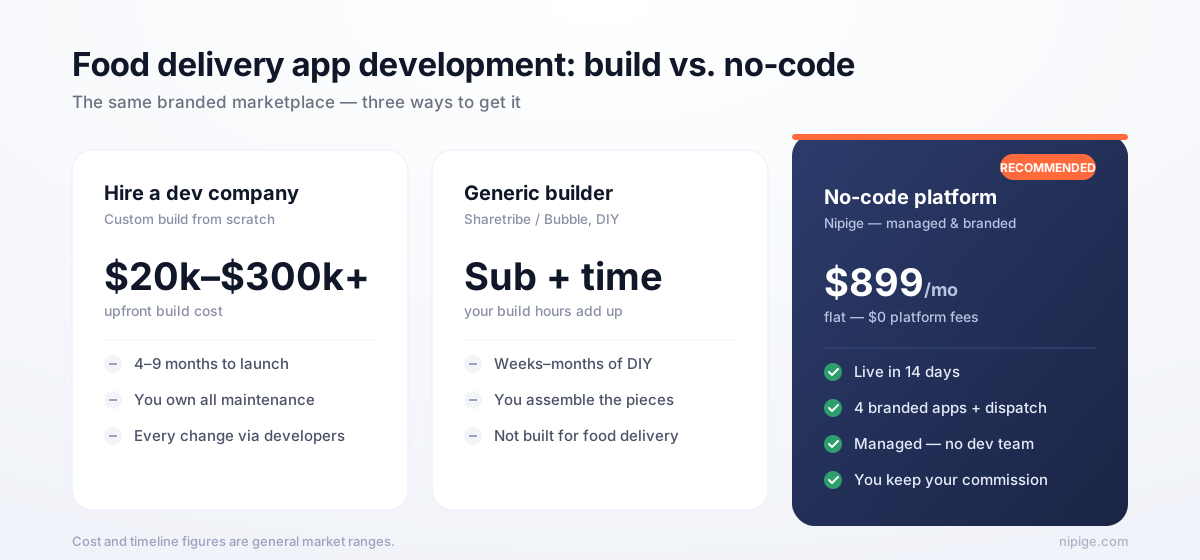
The custom route's cost isn't just the build — it's the months of not operating while you wait, plus every future change going back through developers.
What you actually get with the no-code route
To be concrete about the off-the-shelf option, a purpose-built platform ships the features a delivery marketplace needs on day one:
- Customer ordering app (iOS + Android), branded as yours
- Restaurant panel for menu and order management
- Driver app with real-time GPS dispatch, route optimization, and OTP verification
- Surge pricing by demand, time, distance, and zone
- In-app wallet, loyalty, and referrals
- Multi-vendor support — many restaurants under one consumer app
- Admin console with sales analytics and payout reports
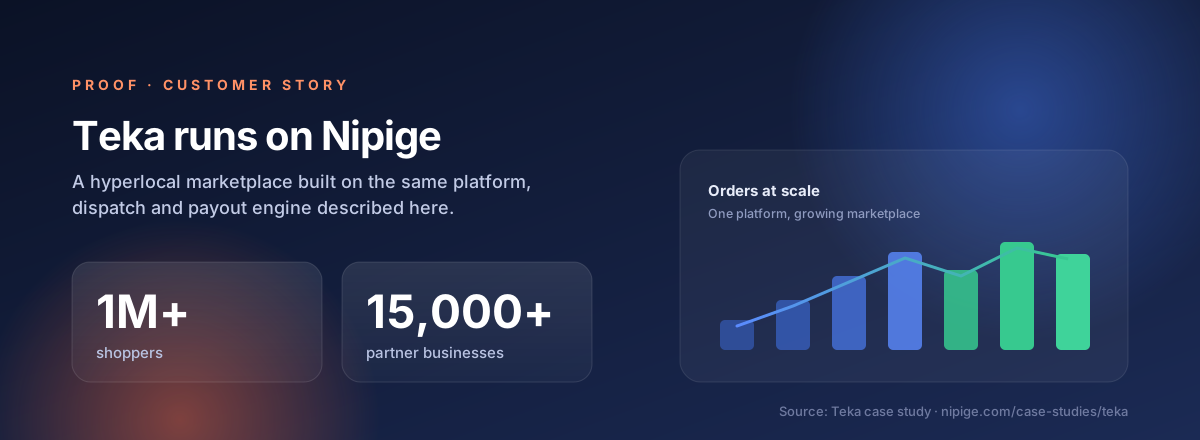
Teka, a hyperlocal marketplace built on Nipige, reports 1M+ shoppers and 15,000+ partner businesses on the same platform — proof a template can hold real volume.
So which route is right for you?
- Building something genuinely custom (novel logistics, proprietary routing)? Hire a development company and budget for it.
- Technical and time-rich, want to own every pixel? A generic builder can work.
- You want to run a delivery marketplace and be live in weeks, not spend six figures first? A no-code, white-label platform is the fastest path.
If that last one is you, the next step is seeing it on your own use case.
→ See how to launch a food delivery marketplace on Nipige
Frequently asked questions
How long does on-demand food delivery app development take? A custom build typically runs 4–9 months. A no-code platform like Nipige launches a branded, four-app delivery marketplace in 14 days.
How much does it cost to develop an on-demand food delivery app? Custom development usually costs $20,000–$300,000+. A managed no-code platform starts from $899/month with $0 platform transaction fees.
Can I get a white-label food delivery app? Yes. On a platform like Nipige, all four apps ship under your brand and are published to the App Store and Google Play under your accounts.
Do I need developers to build a food delivery app? Not if you use a no-code platform. You configure restaurants, zones, payments, and branding instead of writing code; the dispatch and payout logic is pre-built.
The Nipige team builds and operates production marketplace infrastructure - vendor onboarding, real-time dispatch, payments, and native apps - drawing on 13+ years of enterprise billing and monetization engineering at Trigital Technologies.