Last updated: September 29, 2026
How to Choose Marketplace Software: A Founder's Checklist (2026)
When choosing marketplace software, evaluate the platform based on your marketplace model, transaction fees, payment and payout capabilities, mobile apps, vendor management, customization, integrations, scalability, data ownership, support, and total operating cost. Compare these factors against your expected transaction volume and business requirements rather than choosing a platform based only on its monthly subscription price.
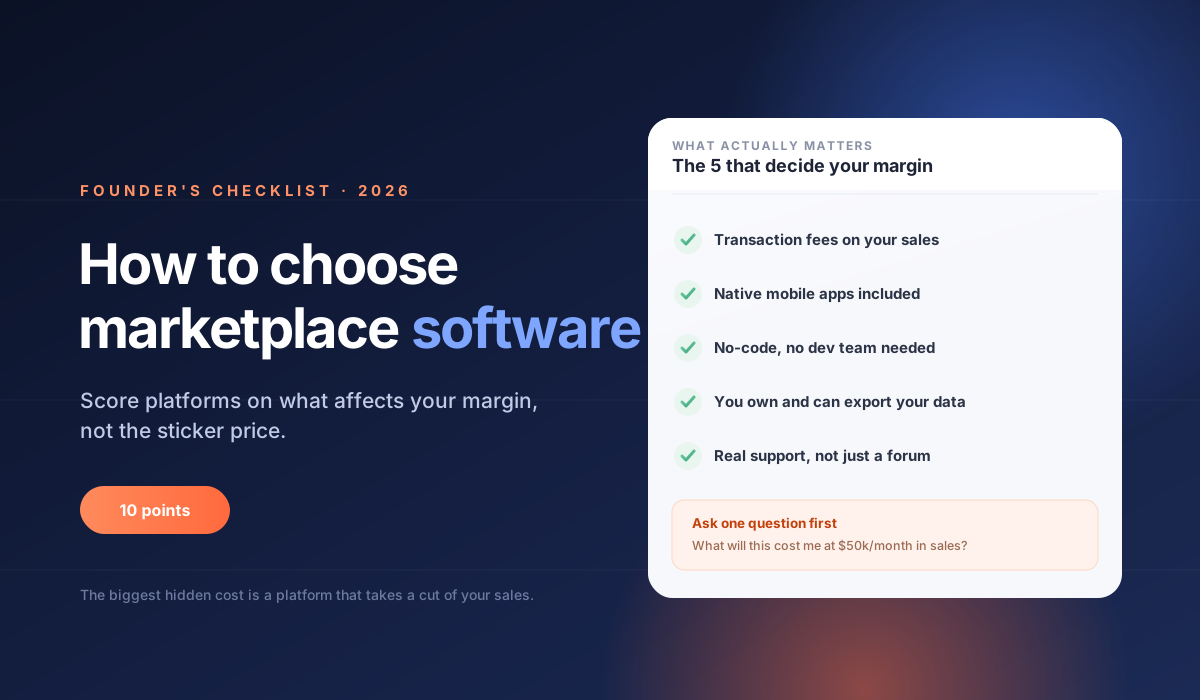
Most advice on picking marketplace software starts with the price. That is the wrong end to start from. What actually matters is how well a platform fits the way you make money and how quickly it gets you live. Below is the checklist I would run any platform through: ten things that move your margin, plus a few questions founders tend to skip until they are already locked in.
How do you choose marketplace software?
Score each platform on the things that hit your margin and your timeline: transaction fees, the real cost at your volume, native apps, how much you can change without a developer, whether you own your data, and how long until you are live. Look at the monthly price after all that, not before. The classic mistake is picking on price alone. A platform that takes a percentage of every sale can start out cheap and quietly turn into your single biggest cost once the orders pick up.
The 10-point checklist
Score every platform you shortlist against these. The ones near the top matter most.
- Transaction fees. The big one. Does the platform take a cut of every sale, on top of your subscription and your payment processor's fee? That percentage only grows as you do, so flat or zero fees are worth a lot here.
- Real cost at your volume. Add up the subscription, any per-sale fees, apps, and add-ons, then work out the number at the sales you actually expect. Not the headline plan price. What marketplace software costs breaks that total down line by line.
- Time to launch. Days, weeks, or months? Done-for-you platforms can have you live in about two weeks. A custom build is months.
- Native mobile apps. Branded iOS and Android apps: included, sold as an add-on, or your problem to build? Building them separately is slow and expensive.
- How much you can change without code. Can you set up branding, categories, and workflows yourself, or do you need a developer every time something needs a tweak?
- Vertical templates. Is it pre-built for your industry, food, services, rentals, real estate, or is it a blank canvas you have to shape from nothing?
- Payments and payouts. Split payments, hold-and-release, your preferred gateway, and options that actually work outside the US and EU if that is where your vendors are.
- Data ownership. Is it white-label so your brand is on everything, is the data yours, and can you take it with you if you leave?
- Room to grow. Will it hold up as vendors, listings, and orders pile up, or will you hit a wall and have to move platforms later?
- Support. A real person and proper onboarding, or a forum and a help doc when something breaks on launch night?
This list is deliberately vertical-agnostic. If you are building a service marketplace specifically, the criteria get more particular, provider scheduling, real-time dispatch, credential checks, two-way reviews, and it is worth reading the dedicated service marketplace software buyer's guide alongside this one.
The questions founders forget to ask
Before you sign anything, get straight answers to these:
- What will this actually cost me per month at, say, $50,000 in sales? Not just the plan price.
- Do I own my data, and can I export it if I decide to leave?
- Are native apps included, or an extra line item?
- How long, honestly, until I am live and taking orders?
- Who picks up the phone when something breaks at 9pm on launch weekend?
Red flags to walk away from
- A price that rises with your sales, because the platform takes a cut of your gross merchandise value.
- Mobile treated as an afterthought, with no native apps or a costly add-on.
- No clear way to export your data or leave.
- Support that is a forum only, with no human on the other end.
Where Nipige fits
Run Nipige through that same checklist. It charges a $0 platform transaction fee, so no platform commission is deducted from your sales and it never takes a bigger cut as you grow. Native iOS and Android apps come built in rather than as a paid add-on. It is no-code, so you set it up without a developer, with ready-made templates for food, services, and real estate. It is white-label, your data stays yours, and a done-for-you setup goes live in about 14 days.
Compare it head to head on the Sharetribe alternative page, check the pricing, and if the bigger build-or-buy question is still open, read build vs buy a marketplace. When you want to see it running, book a live demo.
Frequently Asked Questions
How do I choose the right marketplace software?
Score each platform on the factors that affect your margin and launch: transaction fees, total cost of ownership, native apps, no-code customization, data ownership, scalability, and support. Compare the real cost at your expected sales volume, not the headline price, and favour platforms that do not take a percentage of your sales.
What is the most important factor when choosing a marketplace platform?
For most founders it is the fee model. A platform that takes a commission on every sale grows into your biggest expense as your volume rises, while a flat subscription with no platform commission keeps your cost predictable and takes no cut of your sales.
Should I choose marketplace software with transaction fees?
Only if the total cost still works at scale. A percentage fee is fine when you are small, but it compounds as you grow. Model your cost at your expected sales volume, and prefer flat or zero platform fees if your margins are tight.
Do I need native mobile apps for my marketplace?
In most consumer marketplaces, yes. Buyers and vendors expect iOS and Android apps. Check whether they are included, sold as an add-on, or something you have to build separately, because building native apps from scratch is expensive.
What questions should I ask a marketplace software vendor?
Ask for your total monthly cost at a realistic sales volume, whether you own and can export your data, whether native apps are included, how long until you are actually live, and what support you get when something breaks.
The Nipige team builds and operates production marketplace infrastructure - vendor onboarding, real-time dispatch, payments, and native apps - drawing on 13+ years of enterprise billing and monetization engineering at Trigital Technologies.