White-Label Restaurant App Builder: How to Launch Your Own Ordering App in 2026
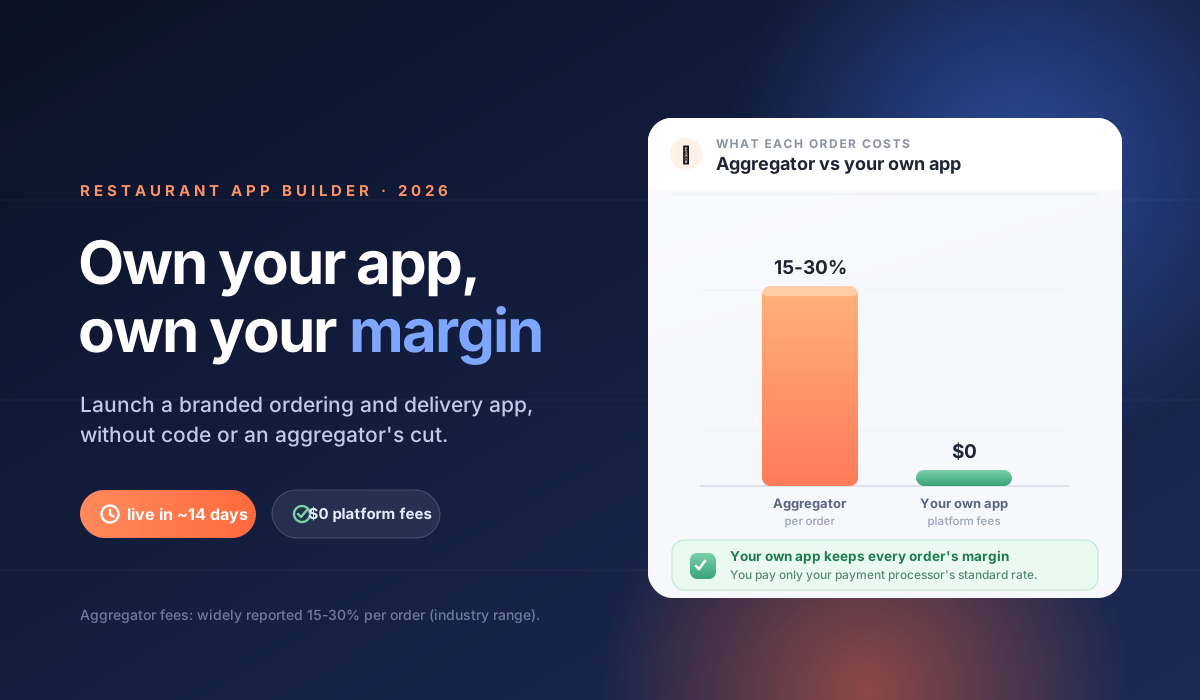
A restaurant app builder lets you launch your own branded ordering and delivery app without writing code or paying an aggregator a cut of every order. Instead of renting space on DoorDash or Uber Eats, you configure a ready platform, add your menu and delivery zones, and go live with your own customer, restaurant, driver, and admin apps. This guide covers when it is worth it, what you get, what it costs, and how fast you can launch.
What is a restaurant app builder?
A restaurant app builder is software that lets you create a branded food ordering app by configuring a ready template instead of coding one from scratch. You set up your menus, prices, delivery zones, and payments, and the builder produces the customer app, a panel for your restaurants to manage orders, a driver app for delivery, and an admin console to run it all. A no-code builder like Nipige launches this stack in about 14 days on managed hosting.
Restaurant app builder vs joining an aggregator
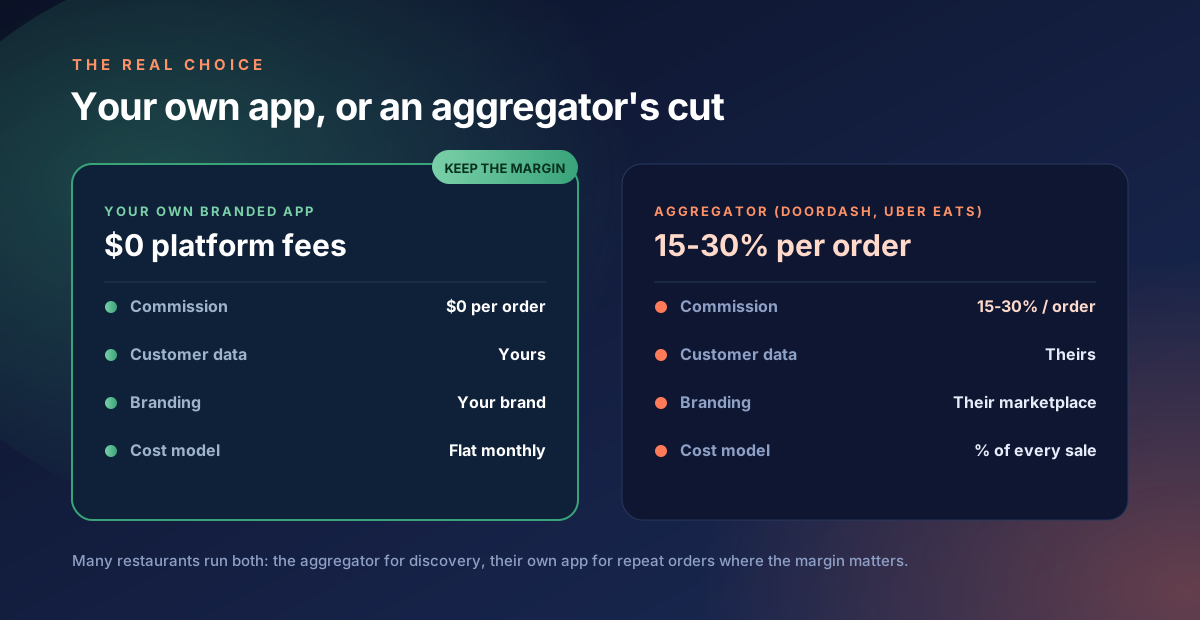
The real decision is not which app builder to use. It is whether to build your own app or keep renting an aggregator. Aggregators like DoorDash and Uber Eats bring reach, but they charge commissions that typically run 15 to 30 percent on every order, and they own your customer relationship and data. Your own app costs a predictable monthly fee, keeps the customer relationship, and protects your margin.
| Your own branded app | Aggregator (DoorDash, Uber Eats) | |
|---|---|---|
| Commission per order | $0 platform transaction fees (you pay only your payment processor) | 15 to 30 percent per order |
| Customer data | Yours | Theirs |
| Branding | Fully white-label, your brand | Their marketplace, your listing |
| Cost model | Flat monthly subscription | Percentage of every sale |
| Best for | Restaurants and groups with repeat customers | Reaching new customers you do not yet have |
Many restaurants run both: the aggregator for discovery, their own app for repeat orders where the margin matters. For the full cost picture, see what it costs to build a marketplace and the app tax explained.
Which apps do you get with a restaurant app builder?
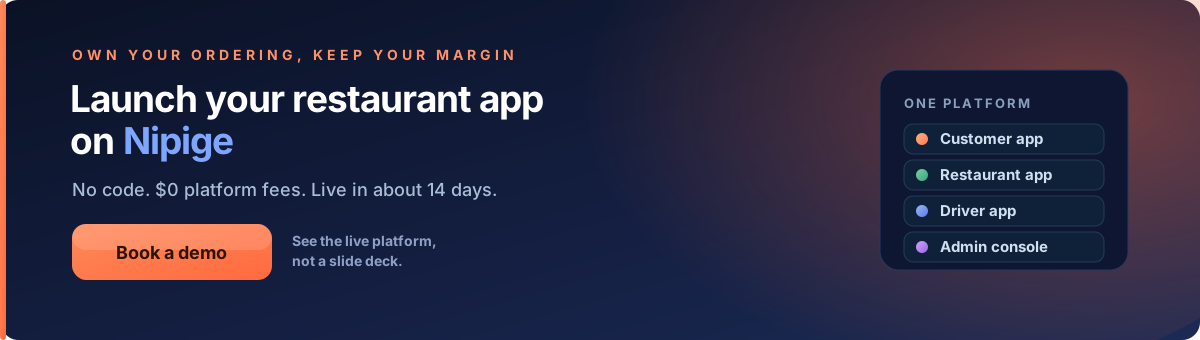
A complete restaurant app builder ships four connected apps, not just one. A customer app to browse the menu, order, pay by card, and track the order. A restaurant panel to manage the menu, accept orders, and mark them ready. A driver app to accept and complete deliveries. And an admin console to manage outlets, delivery zones, payouts, and reporting. Because they share one system, an order flows from customer to kitchen to driver to payout without manual re-entry.
How do you build your own restaurant app without code?
You build a restaurant app without code by setting up a ready platform rather than writing one. The work is mostly configuration: add your outlets and menus, define your delivery zones, connect a payment processor like Stripe or PayPal, brand the apps with your logo and colors, and onboard your drivers. The branded customer, restaurant, driver, and admin apps then go live in about 14 days on managed hosting, with no development team required.
How much does a restaurant app builder cost?
Building a custom restaurant app from scratch with an agency runs into five or six figures and takes months. A no-code restaurant app builder replaces that with a flat monthly subscription and $0 platform transaction fees, so you keep your margin and pay only your payment processor. On Nipige, restaurant and food plans start from $899 a month. The saving compounds: at a 20 percent aggregator commission, a restaurant doing $50,000 a month in orders pays roughly $10,000 in fees, far more than a fixed subscription. See pricing for current plans and the full cost breakdown.
How long does it take to launch a restaurant app?
With a no-code builder, a branded restaurant app can go live in about 14 days, because the apps already exist and you brand and configure them rather than build from zero. A custom build takes months of design, development, and testing before launch. The two-week timeline covers menu setup, delivery zones, payment connection, branding, and driver onboarding, all on managed hosting so you do not run servers yourself.
Is a restaurant app builder white-label?
Yes. A white-label restaurant ordering app builder puts your brand, logo, and domain across every app, so your customers see your restaurant and never the platform behind it. As a restaurant mobile app builder, Nipige publishes native iOS and Android apps under your own brand, and the customer, restaurant, driver, and admin apps are all fully white-label. Your app looks and feels like it was built for you, because it was configured for you.
Where Nipige fits
Nipige is a no-code, white-label restaurant app builder, so it removes the build step and lets you launch your own branded ordering and delivery platform instead of renting an aggregator. You configure a ready restaurant template, add your outlets and menus, connect Stripe or PayPal, and go live with customer, restaurant, driver, and admin apps in about 14 days. There are $0 platform transaction fees, so every order's margin stays with you, and the apps are fully branded to your restaurant. See pricing for current plans.
FAQ
What is a restaurant app builder? A restaurant app builder is software that lets you create a branded food ordering and delivery app by configuring a ready template instead of coding. You set up menus, delivery zones, and payments, and get a customer app, a restaurant panel, a driver app, and an admin console. A no-code builder launches the stack in about 14 days.
Is it cheaper to build my own restaurant app or use DoorDash? It depends on volume. Aggregators charge roughly 15 to 30 percent per order, so at higher order volumes your own app on a flat monthly subscription is far cheaper. Many restaurants use aggregators for discovery and their own app for repeat orders, where keeping the margin matters most.
Do I need to code to build a restaurant app? No. A no-code restaurant app builder lets you configure menus, zones, payments, and branding without writing code, and produces the customer, restaurant, driver, and admin apps for you. You can launch in about two weeks instead of the months a custom build takes.
What apps come with a restaurant app builder? A complete builder ships four connected apps: a customer app to order and pay, a restaurant panel to manage the menu and orders, a driver app to handle deliveries, and an admin console for outlets, delivery zones, payouts, and reporting. They share one system so orders flow through without manual handoffs.
How much does a restaurant app builder cost? A custom build runs into five or six figures. A no-code builder replaces that with a flat monthly subscription and $0 platform transaction fees. On Nipige, restaurant and food plans start from $899 a month, and you pay only your payment processor's standard rate on top.
How long does it take to launch? On a no-code platform, a branded restaurant app can go live in about 14 days, because you configure a ready template rather than build from scratch. The timeline covers menu setup, delivery zones, payment connection, branding, and driver onboarding.
Can the app be fully branded to my restaurant? Yes. A white-label builder puts your brand, logo, and domain across all the apps, including native iOS and Android apps published under your own name, so customers see your restaurant and never the platform behind it.
The Nipige team builds and operates production marketplace infrastructure - vendor onboarding, real-time dispatch, payments, and native apps - drawing on 13+ years of enterprise billing and monetization engineering at Trigital Technologies.