How to Build a Real Estate App Like Zillow (2026)
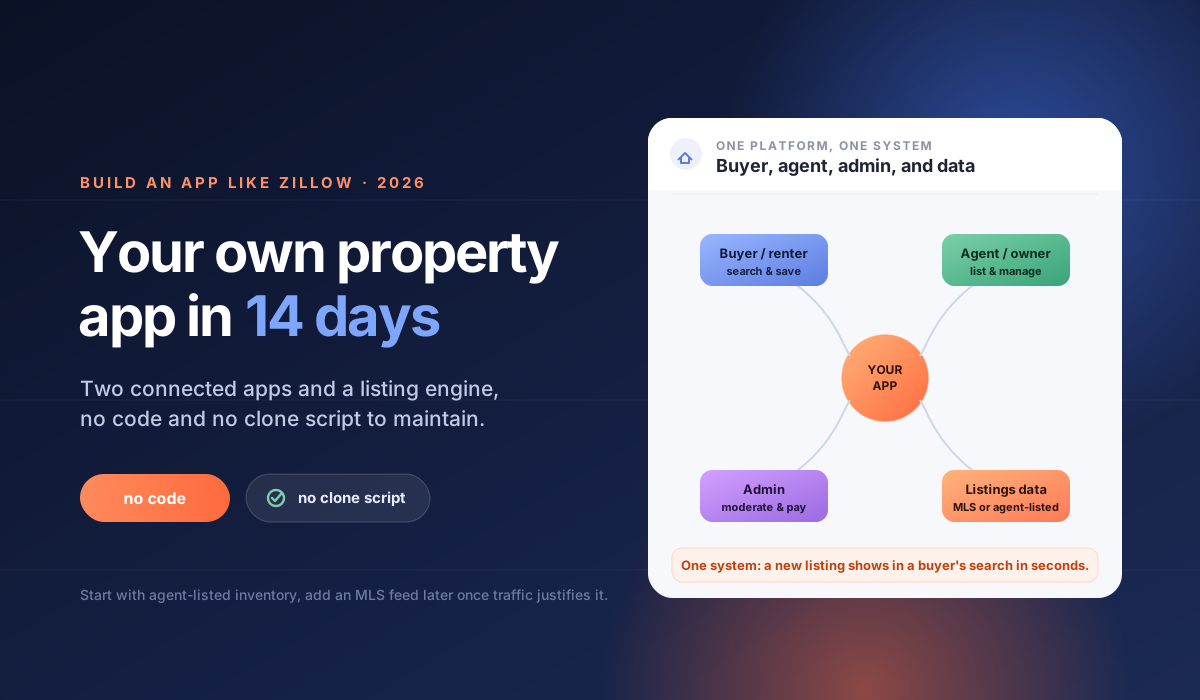
You build a real estate app like Zillow by launching two connected apps, a buyer or renter app to search and enquire and an agent or owner app to post and manage listings, plus an admin console to run it and a property-data source to fill it. You have three ways to do it: custom development, a clone script, or a no-code platform. This guide walks through each route, what you are actually building, where the listings come from, what it costs, and how a no-code build goes live in about 14 days.
How do you build a real estate app like Zillow?
You build a real estate app like Zillow by assembling a listing platform: buyers and renters search and contact, agents and owners post and manage properties, and you run the whole thing from an admin console, all fed by a property-data source. You can code this from scratch, buy a clone script, or configure a no-code platform that ships the stack ready. The right route depends on your budget, your timeline, and whether you want to maintain the software yourself.
What are you actually building?
Zillow looks like one app, but it is a few parts working together. There is the buyer or renter app to search listings, filter by price and location, view property detail pages, save favourites, and contact an agent. There is the agent or owner app to post listings, upload photos, and manage enquiries. There is the admin console where you moderate listings, manage users, handle payments, and run reporting. And underneath all of it is the property-data layer that fills the app with listings. Any app like Zillow needs these parts sharing one system, so a new listing an agent posts appears in a buyer's search in seconds. This guide is about building a Zillow-style listing app; if instead you want many independent agencies trading under one platform, that is a marketplace, and how to build a real estate marketplace covers that model.
The three ways to build an app like Zillow
There is no single "build an app like Zillow" button. There are three routes, and they differ sharply in cost, speed, and who maintains the result. Score them against your budget and timeline before you pick.
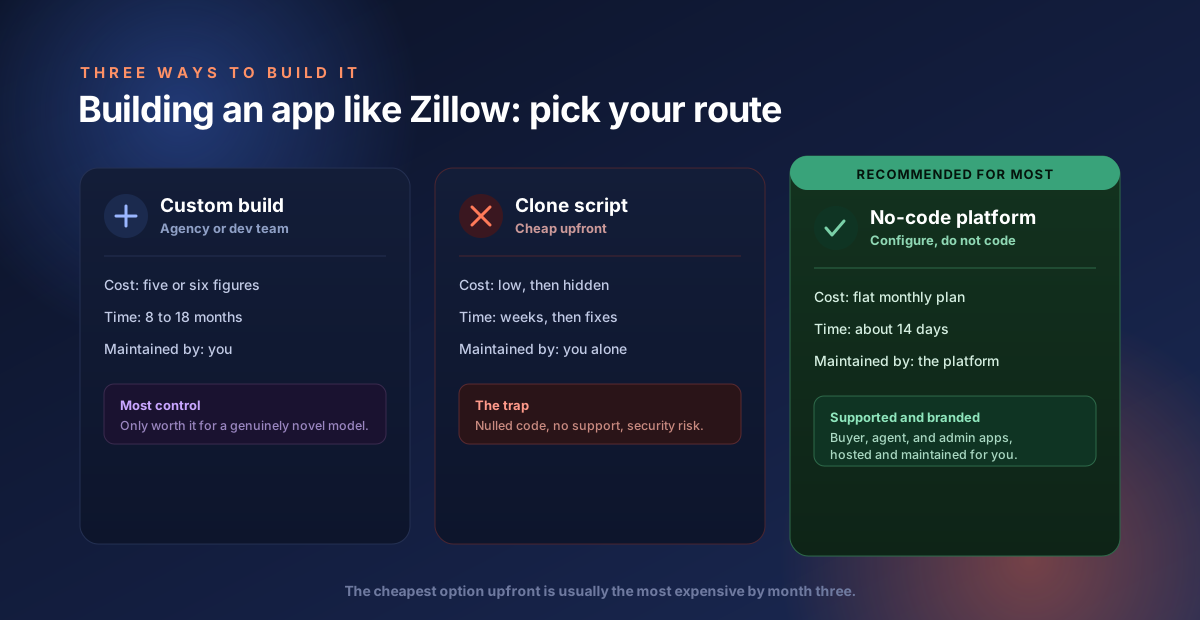
| Route | Typical cost | Time to launch | Who maintains it | Best for |
|---|---|---|---|---|
| Custom development | Five or six figures | 8 to 18 months | You and your dev team | A genuinely novel model with capital to fund it |
| Clone script | Low upfront, high hidden cost | Weeks, then ongoing fixes | You (and whoever you can find) | Almost no one, once you count the real cost |
| No-code platform | Flat monthly subscription | About 2 weeks | The platform (managed) | Most operators launching a standard listing app |
For the full numbers, see real estate app development cost and the cost to build a marketplace.
Why a "Zillow clone script" is usually a trap
Search for a Zillow clone and you will find dozens of cheap or free clone scripts. They look like a shortcut, but most turn into a liability. A clone script is code you now own and have to run, patch, and keep alive yourself, often with no real support and no accountability if it breaks. Many are nulled or pirated builds with security holes, which is a serious risk for an app that handles listings and user contact details. The low upfront price hides the real cost: the developer hours to fix it, secure it, and keep it running. If you would not run your business on unsupported software, do not run it on a clone script.
What features does an app like Zillow need?
An app like Zillow needs the core loop that gets a buyer from a search to a conversation with an agent. Start with this core and add the rest once listings are flowing.
- Listing database and detail pages. Every property with photos, price, location, and description.
- Search and filters. Filter by price, location, bedrooms, and type, ideally on a map.
- User accounts. Separate sign-in for buyers or renters and for agents or owners.
- Enquiry and messaging. A buyer contacts an agent, and the agent sees the lead.
- Saved searches and favourites. Let buyers save homes and get alerts on new matches.
- Admin console. Moderate listings, manage users, and handle payments and reporting.
The features that push an app toward the full Zillow experience come later: virtual tours, a mortgage calculator, agent profiles and reviews, and an automated price estimate. Trying to match every Zillow feature on day one is how launches stall.
Where does the property data come from?
This is the question that separates a real estate app from any other app, and the answer decides a lot of your cost. There are two main routes to fill your app with listings.
- MLS or IDX feeds. In the US, listing data lives in Multiple Listing Services and is pulled through RETS feeds or modern IDX APIs. This gives you Zillow-scale inventory, but it means engineering to connect and refresh the feed, plus an ongoing data licence fee and rules about how you display it.
- Owner and agent listed. Your own agents and owners post their listings directly in the app. There is no licence fee and no feed to build, and many marketplaces start here, then add a paid MLS feed once the traffic justifies it.
Most new apps do not need a full MLS feed on day one. Starting with agent-listed inventory and adding a feed later is the cheaper, faster path to a live product.
What tech stack builds an app like Zillow?
If you build custom, this is the kind of stack a real estate app development company would use in 2026 (as a reference, not a shopping list). It is worth knowing so you can read a quote.
- Mobile apps: Flutter, so iOS and Android share one codebase at lower cost than two native builds.
- Web and agent dashboard: Next.js.
- Backend API: Node.js.
- Database: PostgreSQL with the PostGIS extension for map and location data.
- Search: Elasticsearch for fast multi-filter property search.
- Maps: Google Maps API or Mapbox.
- Price estimates: a Python service if you add an automated valuation model.
You do not have to assemble any of this yourself if you go the no-code route, which is the point of the next section.
How much does it cost and how long does it take?
Building a real estate app like Zillow from scratch runs into five or six figures and takes months. A production-ready MVP is commonly $40,000 to $120,000 over about 8 to 14 weeks, and a full Zillow-class platform with valuation, maps, and analytics is a 9 to 18 month build that can reach $150,000 to $500,000 or more, per 2026 agency estimates from Appinventiv and 7Span. A clone script looks cheaper upfront but adds ongoing maintenance and security costs that are hard to predict. A no-code platform replaces both with a flat monthly subscription and a launch in about two weeks. For the full breakdown, see real estate app development cost.
How to build an app like Zillow without code
A no-code platform gives you the speed a clone script promises without the risk. Instead of owning raw code, you configure a ready, maintained platform: set up your categories, add or import listings, brand the apps, connect payments, and go live. The platform handles hosting, security, and updates. You get the buyer app, the agent app, and the admin console as one system, supported and maintained, and you launch in weeks rather than inheriting someone else's code or waiting out a year-long custom build.
Where Nipige fits
Nipige is a no-code, white-label marketplace builder. For a property app it ships the listing core that every real estate app rebuilds: a buyer or renter app to search and enquire, an agent or owner app to post and manage listings, and an admin console to run the platform, already built and ready to brand. You configure your categories, connect Stripe or PayPal, and go live in about 14 days on a flat monthly subscription with $0 platform transaction fees.
Nipige covers the listing-app base, which is the part of the build that founders most often pay to recreate from zero. Specialist additions like a live MLS feed, an automated price estimate, or virtual tours sit outside the base and stay your choice to add later. See the real estate solution for what is included, the pricing page for current plans, and how Zillow makes money if you are deciding how your own app should earn.
FAQ
How do you build an app like Zillow? You build a listing platform: a buyer or renter app to search and enquire, an agent or owner app to post and manage listings, and an admin console to run it, all fed by a property-data source. You can code it from scratch, buy a clone script, or configure a no-code platform that ships the stack ready to brand.
How much does it cost to build a real estate app like Zillow? A production-ready MVP commonly costs $40,000 to $120,000 over about 8 to 14 weeks, and a full Zillow-class platform $150,000 to $500,000 or more over 9 to 18 months. A no-code build replaces the one-time cost with a flat monthly subscription and launches in about two weeks.
Should I use a Zillow clone script? Usually not. A clone script is code you have to run, patch, and secure yourself, often nulled or unsupported, which is risky for an app holding listings and user contact details. The low upfront price hides the developer hours to fix and maintain it.
Where does the listing data come from? Two ways. You can pull MLS data through RETS feeds or IDX APIs, which gives large inventory but carries engineering work and an ongoing licence fee, or you can start with listings your own agents and owners post directly, then add a paid feed later once traffic justifies it.
How long does it take to build an app like Zillow? A custom MVP takes about 8 to 14 weeks, and a full Zillow-class platform 9 to 18 months. A no-code platform launches a branded listing app in about two weeks, because the apps are already built and you are configuring them rather than coding from scratch.
The Nipige team builds and operates production marketplace infrastructure - vendor onboarding, real-time dispatch, payments, and native apps - drawing on 13+ years of enterprise billing and monetization engineering at Trigital Technologies.