Managed Marketplace vs Listing Marketplace (2026)
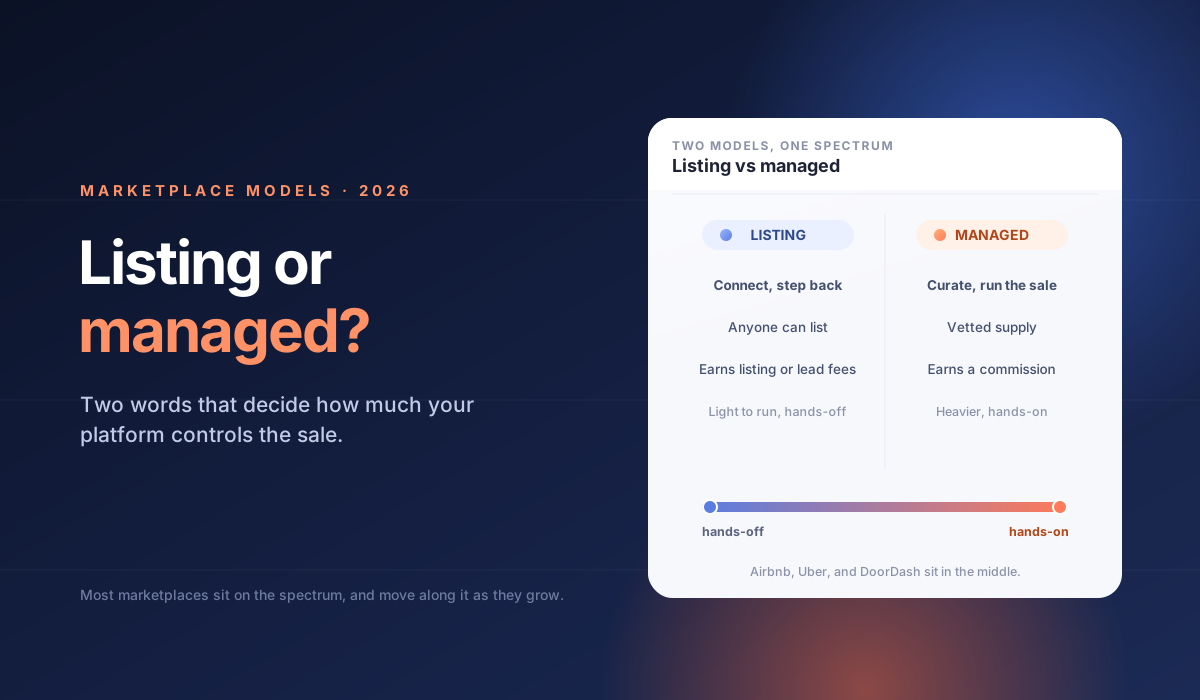
A listing marketplace connects buyers and sellers and then steps back. A managed marketplace curates its supply and runs the transaction itself. The real difference is how much the platform controls what happens after the match. This guide explains both models in plain terms, shows where real marketplaces sit between them, and helps you decide which one to build.
What is a listing marketplace?
A listing marketplace is a platform that connects buyers and sellers and lets them handle the rest. Anyone can post a listing, buyers browse and contact the seller, and the deal closes with little or no platform involvement. The platform is a directory: it owns discovery, not the transaction. Craigslist, classifieds sites like OLX, and property-listing sites like Zillow work this way, and a listing marketplace is sometimes called an unmanaged marketplace. Revenue usually comes from listing fees, ads, or lead fees rather than a cut of each sale.
The upside is that a listing marketplace is light to run and scales fast, because the platform carries almost no cost per transaction. The trade is control: quality and trust sit between the two users, not with the platform, so a bad experience is hard to prevent.
What is a managed marketplace?
A managed marketplace is a platform that curates its supply and takes part in the transaction itself. It vets or handpicks sellers, often sets or guides pricing, handles payment inside the platform, and may own logistics, returns, or quality checks. The platform owns the whole experience, from vetting to payment. Opendoor and thredUP are fully managed, and Uber, Airbnb, and DoorDash are lightly managed, with vetting and in-platform payment. Revenue usually comes from a commission on each transaction, which is higher because the platform does more.
That commission is called the take rate: the share of each sale the platform keeps. A managed marketplace usually runs a higher take rate, often in the 10 to 30 percent range and higher for some fully managed models, because it does more per sale. See marketplace business models explained for how each model earns.
The upside is control, trust, and a higher margin per sale. The trade is weight: every transaction carries real operational cost, so a managed marketplace is more expensive to run.
Managed vs listing marketplace: the key differences
| Dimension | Listing marketplace | Managed marketplace |
|---|---|---|
| Platform role | Connect, then step back | Curate and run the transaction |
| Supply | Anyone can list | Vetted or handpicked |
| Pricing | Set by sellers | Often set or guided by the platform |
| Payment | Often off-platform | In-platform, the platform holds the money |
| Trust | Sits between the two users | Backed by the platform |
| Revenue | Listing, lead, or ad fees | Commission or take rate (higher) |
| Operating load | Light | Heavy |
| Examples | Craigslist, OLX, Zillow | Opendoor, thredUP, Uber, Airbnb |
Most marketplaces are somewhere in between
Real marketplaces are rarely pure. They sit on a spectrum from fully listing to fully managed, and most move along it over time.
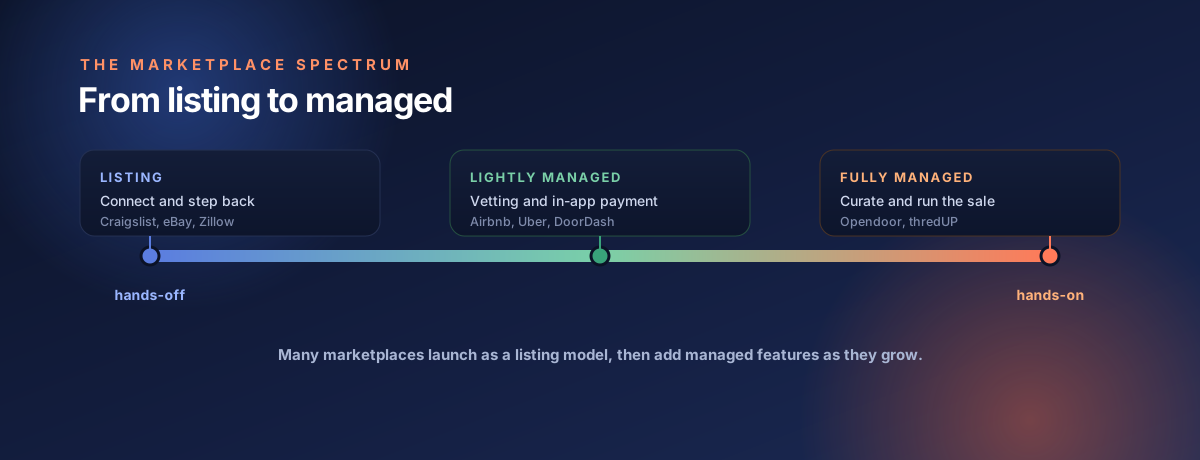
Airbnb is the clearest example. It started close to a listing model, then added in-platform payment, reviews, identity checks, and a guarantee, which moved it toward the managed end without controlling every stay. Many marketplaces follow the same path: launch as a listing model to go live cheaply, then add managed features once trust becomes the thing holding buyers back.
Which model should you build?
The right model depends on why buyers hesitate.
- Start with a listing model if your market already trusts its sellers, the item is simple, and you want to launch cheaply and grow supply fast.
- Go managed if trust or quality is the reason buyers hold back, the transaction is high value, or you can charge more by handling it end to end.
- The common path is to launch as a listing marketplace, watch where buyers drop off, and add managed features like in-platform payment and vetting exactly where they are needed.
You do not have to pick a side on day one. You have to know which lever you will pull first.
Where Nipige fits
Nipige is a no-code, white-label marketplace builder, and it gives you the pieces for either model. Out of the box you get a customer app, a vendor app, an admin console, and in-platform payments through Stripe or PayPal. You can run a light listing marketplace, or turn on vendor approval and curation to run a managed one. You decide how much control to keep; Nipige gives you the controls, without writing code.
See how to build a multi-vendor marketplace for the build, and the pricing page for current plans.
Frequently Asked Questions
What is the difference between a managed and a listing marketplace?
A listing marketplace connects buyers and sellers and lets them handle the transaction, earning from listing or lead fees. A managed marketplace curates its supply and runs the transaction itself, handling payment and often pricing and logistics, and earns a commission on each sale.
Is Airbnb a managed or a listing marketplace?
Airbnb is a lightly managed marketplace. It began close to a listing model, then added in-platform payment, reviews, identity checks, and guarantees, which moved it toward the managed end without fully controlling each stay.
Which marketplace model is easier to start?
A listing marketplace is easier and cheaper to start, because the platform only handles discovery and carries little operational load per transaction. A managed marketplace does more per sale, so it costs more to run but can charge more.
Do managed marketplaces make more money?
Managed marketplaces usually earn a higher take rate per transaction because they do more: payment, curation, and often logistics or guarantees. Listing marketplaces earn less per transaction but scale with lower operating cost.
Can one marketplace use both models?
Yes. Most marketplaces sit on a spectrum, and many start as a listing model to launch cheaply, then add managed features like in-platform payment and vetting as trust becomes the thing holding buyers back.
The Nipige team builds and operates production marketplace infrastructure - vendor onboarding, real-time dispatch, payments, and native apps - drawing on 13+ years of enterprise billing and monetization engineering at Trigital Technologies.